01
The stone
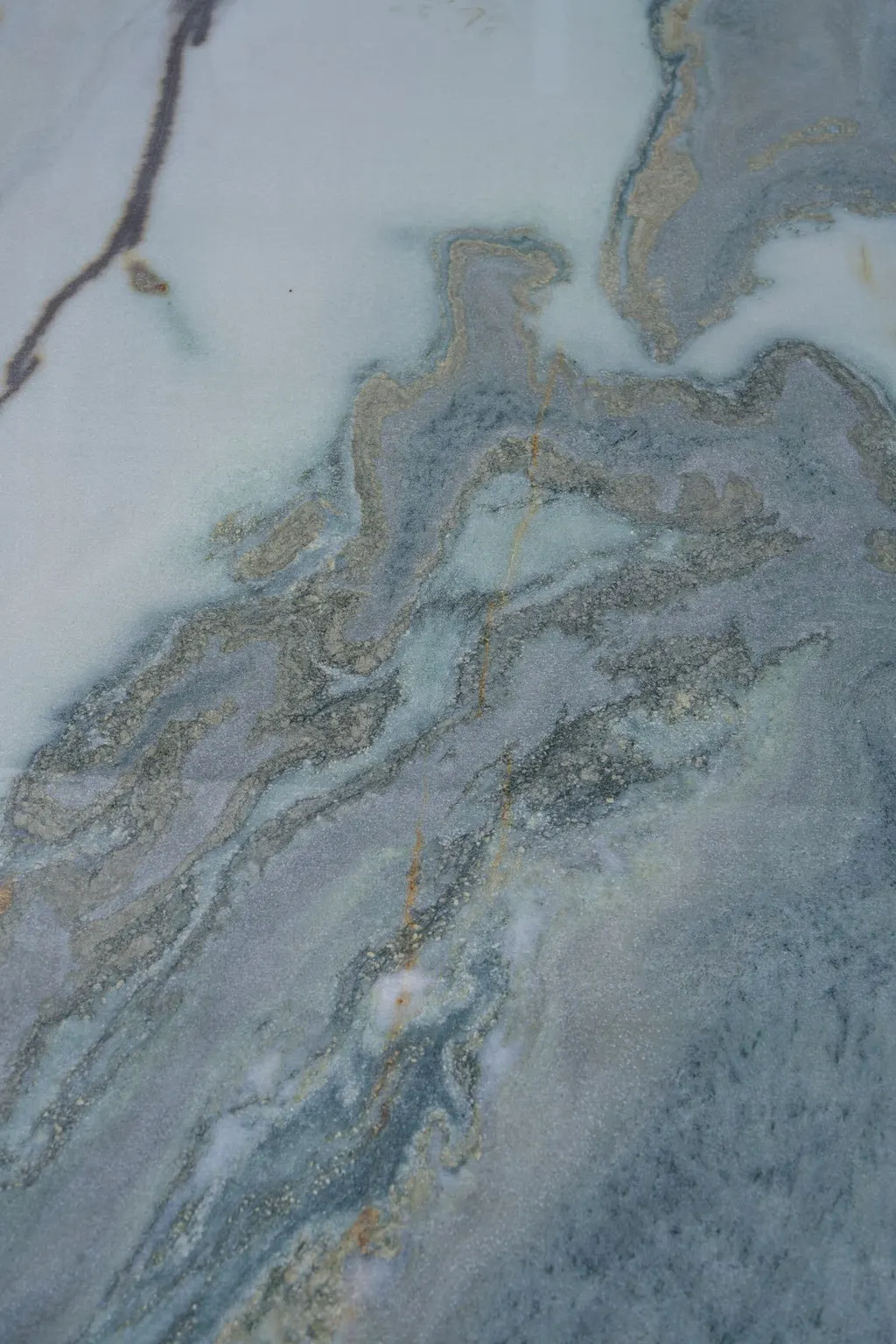
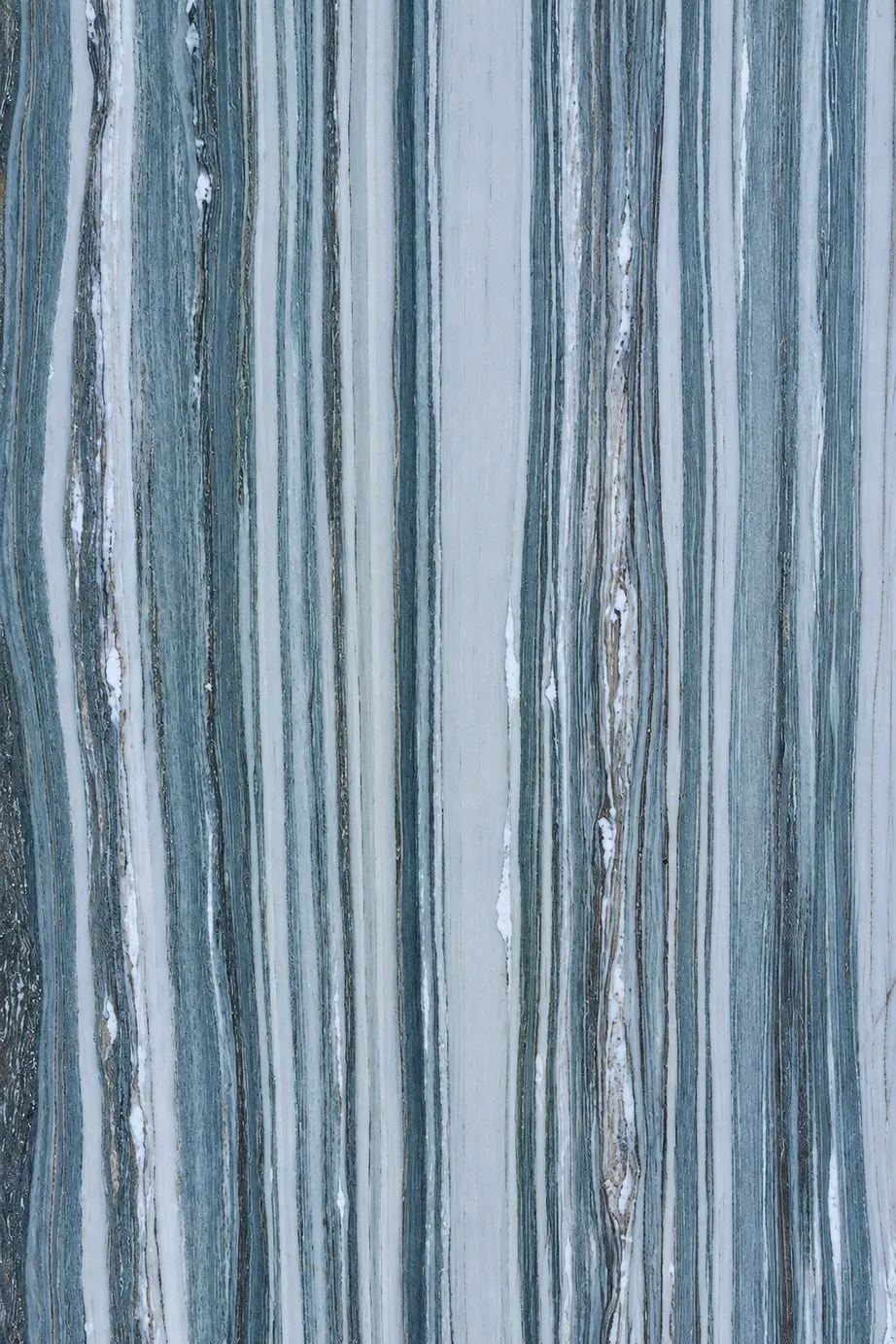
Santa Giulia is a cipollino, a foliated marble from Cap Corse. Its density allows it to withstand frost, salt and abrasion where other marbles call for special care. Its veins and quartz inclusions span an entire range, from ochre to deep blue. Its best guarantee is not a test report: it is having served as paving for eight centuries, in Bastia, Genoa, Marseille and Lyon. A stone that has stood up to the street can stand up to anything.
02
Since the 12th century
“The paving of Bastia, lastricato and made of slabs of Brando stone quarried nearby, is a kind of jasper-veined marble superior even to the paving of Milan, Florence and Naples; it would be more worthy of palaces or temples than of streets: the hues of this stone come out after the rain with a singular brilliance.”
— Press archive, facsimile of the Gazette de France, 1837
03
Petre Scritte, the written stone
Corsica is split in two: granite to the west, schist to the north-east. Cap Corse belongs to the latter, and it is from this dark slope that cipollino emerges: a marble born of Alpine compression, foliated as few marbles are.
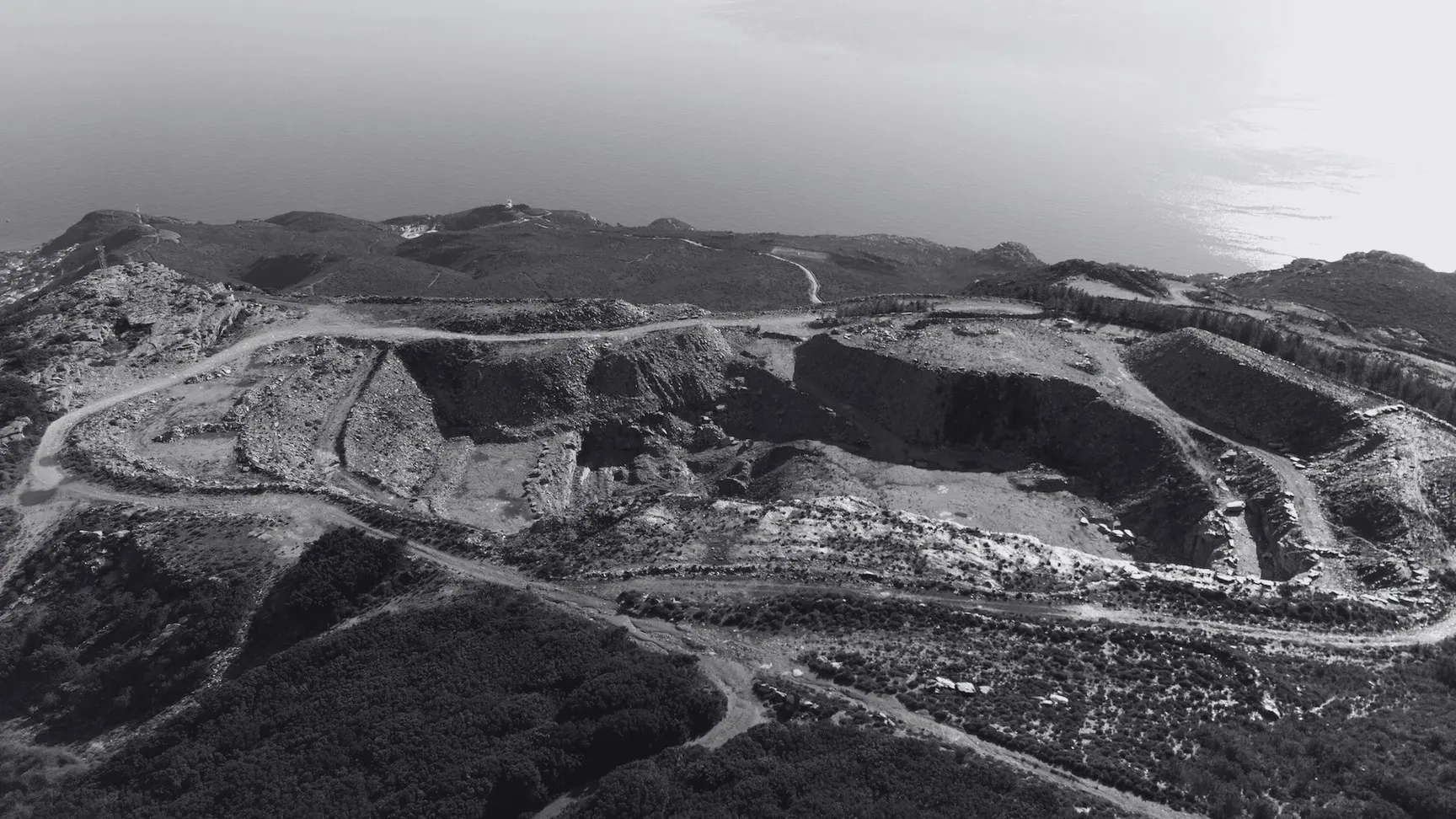
On the flank of the Cap, facing the open sea, the quarry has always been called Petre Scritte, the written stones. Engravings have been cut into it since the 12th century: masons’ marks, tally marks, initials. Where the rock counts in millions of years, people have left a measure of their own: a signature, at hand height.
Cap Corse cipollino is one of the rarest marbles in Europe; only a handful of quarries still work it. Used under Rome, then in the island’s Pisan churches, it went on to pave Bastia, Marseille, Genoa, Livorno, Lyon and Cannes. Few stones have shaped the face of a region to such a degree.
Its golden age came under the Second Empire: quarrymen and stonecutters joined forces, the industry thrived, its reputation crossed the sea, until 1914 cut its momentum short. Veined with quartz, changing after the rain, it has never ceased to intrigue.
“The paving, made of slabs of Brando stone, is a kind of jasper-veined marble, superior even to the paving of Milan, Florence and Naples. It would be more worthy of palaces and temples than of streets.”

04
Santa Giulia
Marbles take their names from places: Carrara, Rosso Verona, Portoro. Rarely from people. Santa Giulia is the exception, and this time the reason lies first of all with her. Giulia was Carthaginian, of noble birth, reduced to slavery after the fall of her city. Those who owned her described her above all by her grace: the merchant who bought her was struck by her beauty and her calm; so was the governor who judged her. He offered her freedom in exchange for a simple gesture: to sacrifice to the gods of Rome. She refused, once, then again, until her martyrdom.
Legend has it that her ship first touched the island in the south, on the very beach now called Santa Giulia, before sailing north to Nonza, on the Cap, where she met her death. Two ends of Corsica, a single name, set like a link between the turquoise sands of the south and the rock of the Cap.
That the saint is patron of the whole island, and that her relics took the road to Italy before the stone did, makes the name all the more fitting. But the story, first of all, tells us who she was: a woman who did not give in.
05
Where it already lives
The stone in projects
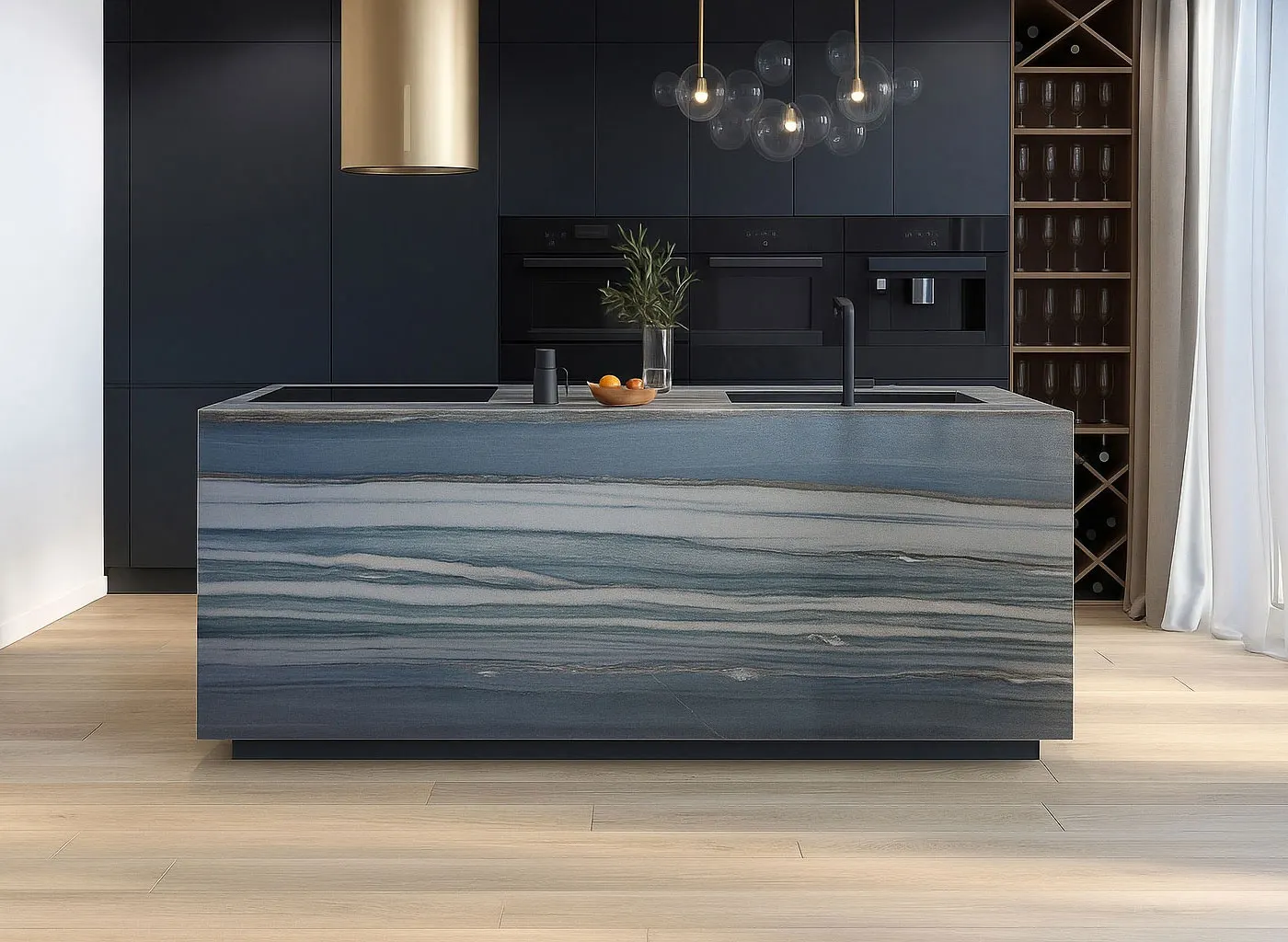
Santa Giulia asserts itself with quiet authority. A basin that catches the light through its layers. A kitchen worktop where the veins of the stone become part of everyday life. Bathrooms where the depth of the stone turns water into something precious.
It is as much at home in palaces as in private residences. The quarry’s carefully curated palette, from green to deep blue, adapts to every vision without compromise. Time only refines it. Wear becomes patina.
06
I colori
Colours

Bianco Santa Giulia
Blu Santa Giulia
Grigio del Capo Corso
- Bianco Santa Giulia
- Blu Santa Giulia
- Grigio del Capo Corso
07
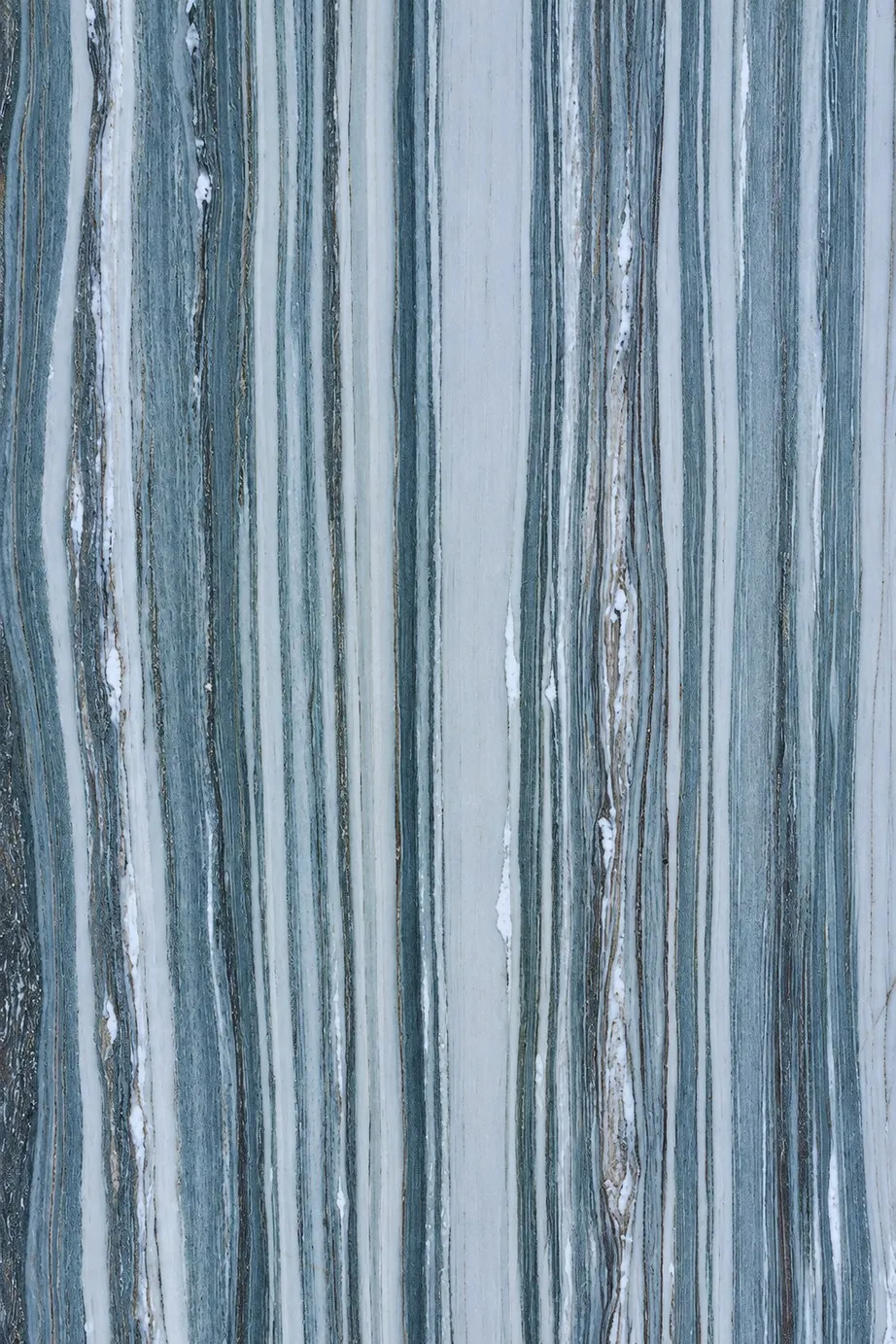
Variants
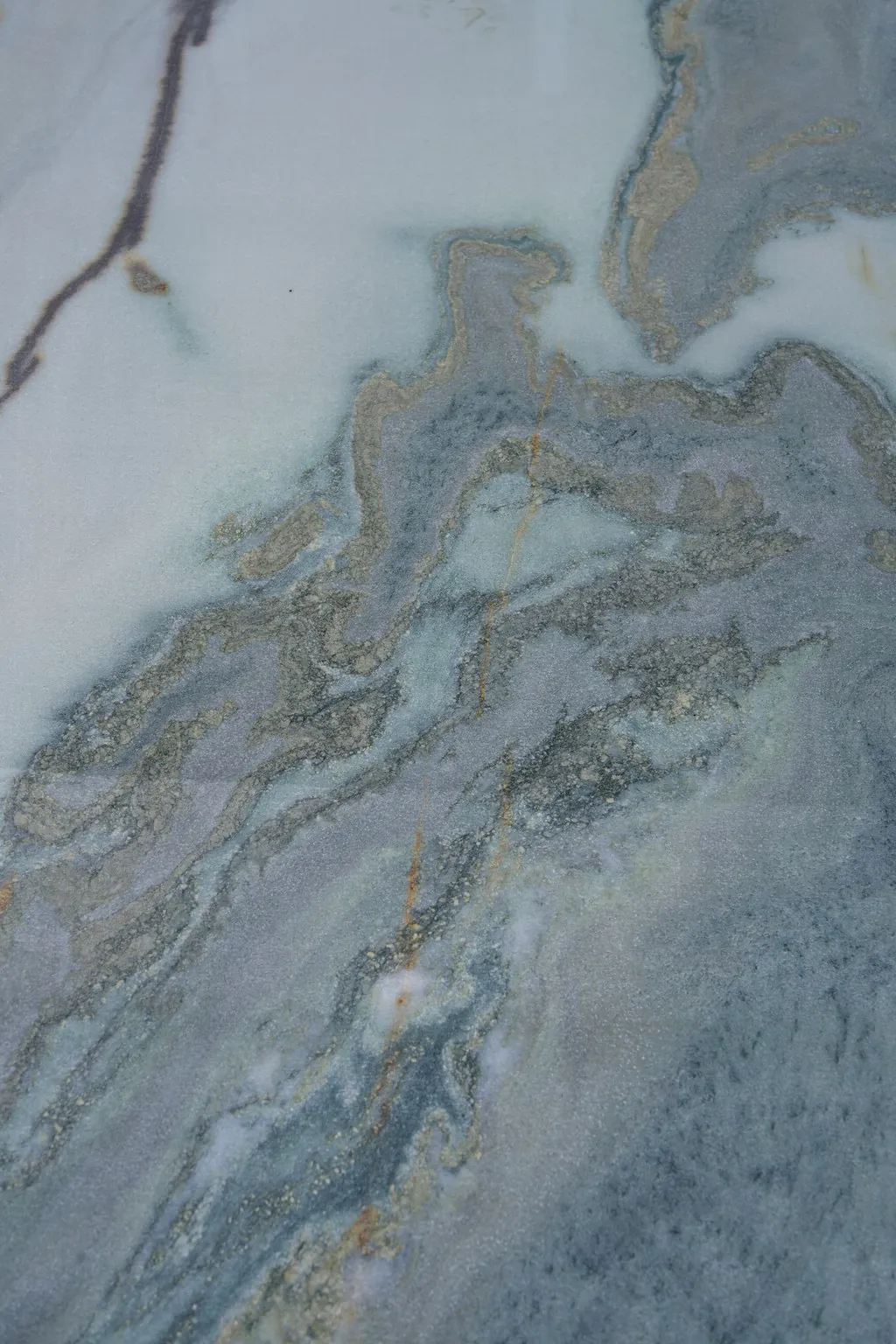
08
Technical data
| Geological type | Cipollino — metamorphic limestone (marble) |
|---|---|
| Composition | siliceous limestone with calcite, significant amounts of quartz, small amounts of dolomite (CO3)2 (Ca,Mg) |
| Apparent density | 2.68 g/cm³ |
| Porosity | 1.60% (non-porous, frost-resistant) |
| Sound propagation velocity | 6,185 m/s |
| Frost resistance | frost-resistant |
| Salt resistance | unaffected |
| Surface hardness (NF B 10-506 standard) | 1.0 mm scratch |
| Compressive strength | 83 to 91 MPa |
09
Marble products
- 01Raw slabs
- 02Polished slabs
- 03Blocks for cutting
10
Sourcing: from the quarry to your project
Ordering
- Port of departure
- Bastia — Corsica
- Lead times
- on request, depending on volume & finish
- Sales contact
- BETAG, Zone Artisanale Folelli, BP 54, 20213 Penta-di-Casinca, France — contact@betag.fr — +33 4 95 38 19 30
Zone Artisanale Folelli, BP 54, 20213 Penta-di-Casinca
contact@betag.fr — 04 95 38 19 30